



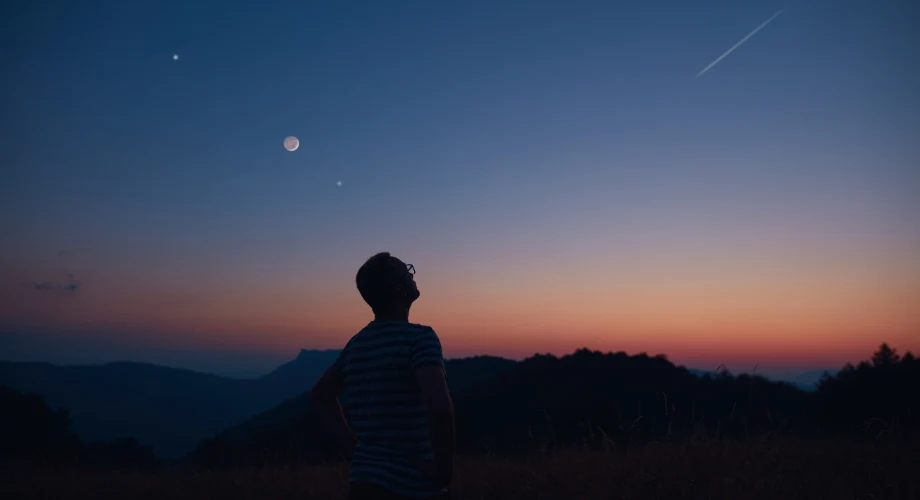
Every hiker has found themselves in this situation at least once. A familiar trail has taken longer than expected – you lingered a moment too long at a viewpoint, the terrain is tougher than you planned, whatever the case – it’s sunset and that glorious view has now turned to shadows on the ground. As you crest the final incline, you’re devastated to realize that you still have an hour at least back to the trailhead. That uneasy feeling in your belly? Normal. But it doesn’t have to be a reality of an unfortunate experience if it doesn’t need to be.
The issue with darkness is that it transforms everything on the trail. What was once an obvious landmark is now invisible. What was an easy, passing glance of a marker during the day is now completely overlooked. It’s astonishing how even the most well-known trails become unrecognizable when light disappears. But those who’ve experienced it know that the navigation process isn’t so much about visibility but instead; exploration and method.
What Happens to Your Vision (And Why It Matters)
There are generally two phases that happen to your eyes in the dark. The first is relatively obvious – things get dark and you lose color vision. But the second phase is where most individuals fail. After 20-30 minutes in darkness, your body adjusts to using different rods instead of cones. Your eyes become hypersensitive to low levels of light and you lose fine detail and depth perception.
This is why that cute little root that you easily stepped over is now a trip hazard; your brain cannot perceive distance and obstacles don’t pop as easily into view. Most people don’t realize that they’re still adjusting at night, panicking before their time has come to perfect their night vision.
Artificial Lighting’s Role
The appeal of lights in the darkness is often overused or underused. Think of it this way – shining as bright of a light as possible on an object – even blinding yourself – makes it easier to navigate, right? Wrong. Every single time your retina is flooded with extreme lighting, you undo the process of the 20-minute adaptation.
Pupils become pinholes; you lose the benefit of natural night vision; you’re back to square one.
Instead, softer lights, like a reliable flashlight with adjustable brightness, allows for lower functionality paths where some night vision can still exist while illuminating enough for trail markers and hazards. Bright modes should be reserved for reading maps, identifying unseen landmarks and processing tricky areas.
Red light gets a lot of attention for preserving night vision. Yes, it’s true, red light does not allow for that full pupil-contraction response to happen. However, it’s not entirely reliable – you can glance at where you’re going or at your pack without completely wiping out whatever night adaptation you’ve had going. Some people love using red light; others find it more dangerous than helpful when navigating.
Reading the Trail Without Clear Visibility
When darkness prevents clear vision of the trail, you start detecting other nuances. Trails are different from surrounding land by ground texture – they’re more compact, indentations from years of foot traffic from subtle nuances in vegetation per square inch. While it’s sometimes hard to identify this intersection at nighttime through boots, if you’re suddenly stepping on loose gravel or dense bushes, it’s likely you’ve lost your way.
Markers become critical at night but they’re harder to detect. Reflective markers are worth their weight in gold at night – they glint little bits of light and show up more from a distance than painted blazes. This is why scanning with your light becomes critical; a few side-to-side scans here and there can help identify reflectiveness in physical markings or blazes on trees.
Sound becomes more critical than most give it credit for. Trails through forests have unique acoustics from surrounding woods. The sounds of walking on packed trails differ from the sounds of crunched foliage or deeper brush. Sounds of water are helpful for orientation; if you recall crossing something earlier, hearing it again indicates relationship to location.
Navigation Tools That Actually Help
Some people rely entirely on their phones for navigation which works fine…until darkness presents new complications. Phone screens are bright; every time you check where you are, your night vision suffers. Lowering brightness helps but here’s the kicker – cold weather drains batteries quickly and if you’re out hiking in the dark, chances are the temperature has dropped.
A simple backup compass and directional inclination makes all the difference; no one needs a wilderness navigation degree to understand that their car is northeast from their current position or that the trail runs primarily north/south – and understanding significant directional awareness avoids fatal wrong turns.
GPS units made for hiking adapt better in low-light situations than phones thanks to power-ratio stability for longer distances. They’re equipped with conditions tested screens better suited than navigating via flashlight through manual mapping apps and the pre-programmed routes allow access to ensure you’re on the right path without guesswork.
When You Need to Stop
Sometimes the right choice is to simply stop. If you’re realizing it’s taking too long to gain any ground, if you don’t know which direction is proper or if trails have become imperceptible – these are signs that it’s time to camp out. An unforeseen bivy isn’t typically on anyone’s agenda but it’s better than losing your way or sustaining an injury.
However, most people aren’t prepared with enough gear for an unexpected night. An emergency bivy sack is three ounces and hardly takes up space; it keeps you alive if everything goes south. Small backup sources of light, materials to make fire and rudimentary first aid supplies – it seems unnecessary until one desperately needs it.
Building Skills Before You Need Them
Night navigation is best practiced at times when no one needs it right then and there. Take a familiar trail and hike it at dusk – you’d be surprised how quickly trails change at dusk; what becomes undetectable first versus how long some landmarks last longer than they should for caution purposes; observe what elements become navigable in minimal light.
This practice enables beneficial experience – what works for you personally; do you find you need more light than expected? Or maybe a little less? How does your personal inventory fare in low light? What three-inch-deep-wide creek you didn’t expect because of familiar daytime expectations proved right or wrong? What’s ultimately irrelevant until nighttime conditions beg otherwise?
The skills that keep people on track when darkness falls may not seem like all that complicated – but they’re certainly not common sense relative to daytime hiking. It’s a matter of light management, discernment about subtle clues within trail features, orientation with limited navigational supplies and knowing when to stop. Most importantly it’s about remaining calm to work through things one step at a time instead of getting hopelessly frightened – and darkness is never the issue; it’s how people respond to it that proves perilous.