




Most people’s perception of working in home care revolves around assisting the elderly with daily living tasks and earning a minimum wage paycheck. While this isn’t necessarily wrong, it overlooks about 90% of what makes such work worthwhile.
In truth, the benefits of working in home care are not those typically found on a job listing. Some make your life easier and some give you the feeling of doing something that matters. And, quite frankly, in an age when many people feel like they’re just pushing papers and filling quotas, that second part may be more valuable than anyone cares to admit.
The Flexibility of Scheduling That Actually Exists
First and foremost, people don’t realize how flexible home care can be compared to nursing hours in the hospital. You’re not tied to a rigid shift for when you work most days; you aren’t stuck working a 3-11 and feel guilty if you clock out even five minutes early.
Home care agencies often employ flexible hours. Of course, there are early morning shifts for people who need to be home when their kids get off the school bus. There are evening hours for people who go to school and need to pick up a shift after class. Some caregivers are only available on weekends; others during weekdays. And yet there are also caregivers who piece together morning and evening hours for whatever other responsibilities they have.
This is not true across the board but compared to retail jobs who change your schedule every week or a nursing position that requires rotating night shifts, a career in home care often allows caregivers much more input into when they’re actually working. So if you’re considering home care job opportunities, this is something worth asking about upfront—it’s the difference between a job that works with your life and a job that takes your life over completely.
The One-on-One Connection That Actually Matters
How many patients do you juggle at once in a hospital or nursing home? For a nurse, it could be as many as eight, ten, maybe even twelve. You’re moving room to room, checking boxes, administering medications, and by the end of your shift, you can barely recall their names.
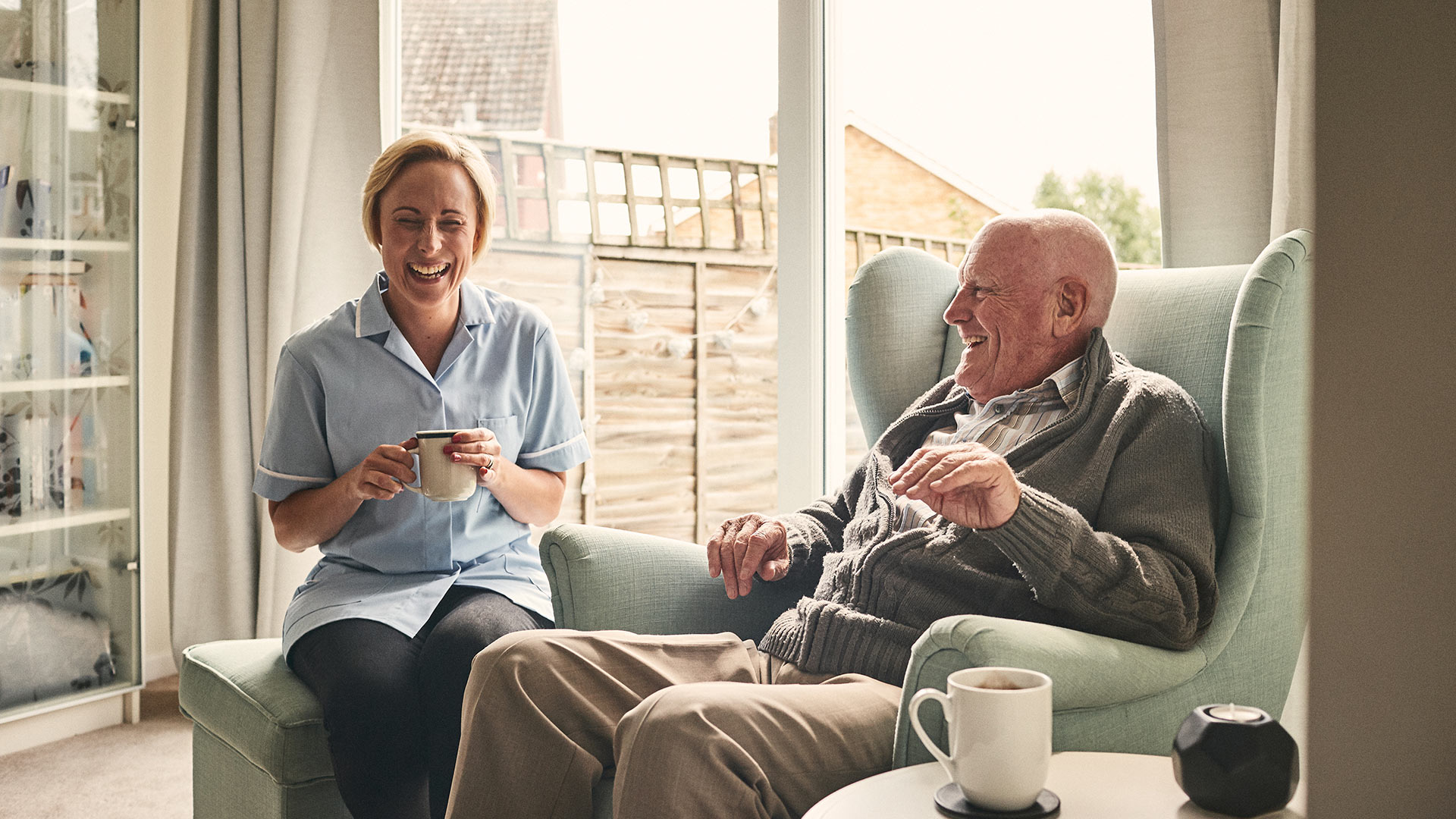
How many clients do you service at a time in home care? Most likely, one—or at the very least one person per shift. You get to know them. You realize your patient was once a carpenter who built three houses singlehandedly. You learn the punchline of another person’s dad joke but laugh at all of them anyway. You become part of someone’s daily routine instead of another face under scrubs.
This makes more of a difference than it needs to. It’s hard for someone stretched thin across twelve patients to feel as though they’ve made any difference when they can’t remember someone’s diagnosis or food preference. It’s easier to impact someone with sustained focused time than it is sporadic ten-minute intervals across the day.
The Training That Doesn’t Bury You in Debt
Most other nursing careers require years of schooling and student debt that’ll follow you around for decades. Home health aides generally require a few weeks training and certification that cost far less than nursing school ever could.
Some agencies even pay for your training on the required classes, pass your certification exam and no thousands owed later, you start working. This is especially true for those who want to get their foot in the door for healthcare nursing careers but can’t afford or don’t want to commit years for a degree.
But even once you’re certified as a home health aide, many agencies offer tuition assistance or reimbursement should you decide to go back for other certifications or degrees on your way up the healthcare hierarchy.
You get to earn money before having to pay money—and that’s a nice change of pace.
The Real-Life Experience That Is Invaluable
Some things can only be learned when working in home care, not nursing school. You’ve got to learn how to troubleshoot without an administrator standing over your shoulder. You’ve got to learn how to communicate with those who may be frustrated by their current cognitive state or simply scared. You’ve got to get used to the painstakingly messy parts of someone unable to care for themselves fully.
That experience is invaluable. When professionals apply for LPN or RN work after having gone through the home care process, they already come equipped with the knowledge that nursing school may never give them because they’ve already gone through with it themselves—the parts that force some students out during their first clinical rotation because they never signed up to wipe asses or clean vomit.
It’s not a dead-end job; it’s often a starting point for those who want to craft an entire career around it.
The Job Security That Doesn’t Exist Elsewhere
Currently, professional demand for home care workers is not just growing—it’s exploding. The population is aging faster than newcomers can enter the profession to meet caregiver needs; this means if you’re good at what you do, you’ll never have trouble finding work.
Job security like this doesn’t exist these days—in a world where companies downsize due to industry churn and technological takeover, where automation supplants positions that were once held by real humans, someone still needs to help grandma get dressed in the morning and ensure she takes her medication.
That’s not something a robot or computer can do—and certainly not for many years down the line.
Employers are fighting over competent employees instead of vice versa. When that’s the case, higher pay rates and better benefits are on the table—and so is leverage on what’s right for every caregiver seeking employment.
The Emotional Reward That Sounds Cheesy But Probably Isn’t
Yeah, sure—the last one sounds like it came off of a cheesy motivational poster. But talk to anyone who’s worked in home care for longer than three months, and they’ll let you know that they feel differently about this job than most others they’ve ever done.
You’re supporting someone maintaining their independence instead of being shipped off to an assisted living facility. You’re giving family members peace of mind knowing that grandma isn’t alone all day long watching soap operas eating jellybeans. You’re often the only person that an elderly person talks to that day.
That matters more than most people can understand until they’re in that position themselves. And while it might not pay the bills… it gives you reason enough to get out of bed on Monday morning when you know someone’s day is 100% better because you’re showing up.
The Bottom Line No One Wants To Acknowledge
Working in home care is not for everyone. It’s physically demanding and emotionally taxing on occasion—and sometimes downright frustrating. But it’s hard to find this combination of flexibility, accessibility, security, and true meaning-making elsewhere in a professional field.
It’s easy enough to look at benefits from behind the recruitment desk—but it’s even easier to recognize those more abstract benefits once you’ve started doing the work overtime. The relationships forged, newfound skills mastered, prideful possession of doing something that actually helps people instead of just lining shareholders’ pockets with profits.
And that’s a noteworthy consideration if you’re looking for more than just another paycheck.