





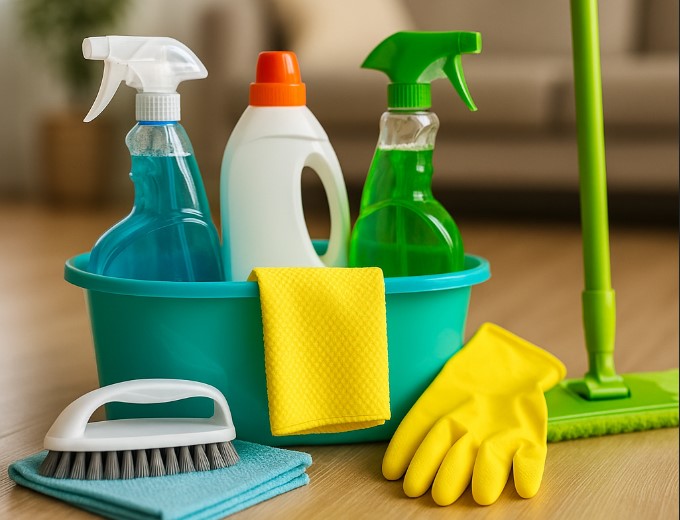
If you’ve ever wondered how pros clean faster and get better results, it’s not magic—it’s method. The secret is a consistent order of operations, products that actually work, tightly scoped checklists, and a “top-to-bottom, dry-to-wet” workflow that avoids rework. Use the plan below to set up your supplies, then follow the room-by-room checklists. You’ll finish faster, with a cleaner home and less effort. For occasional deep house cleaning, you can simply expand this same checklist by adding inside appliances, baseboards, and hidden areas under furniture.
Core Principles Pros Follow
- Top to bottom, left to right, back to front.
Start at the highest surface and the farthest point from the exit; move methodically to avoid re-dirtying areas. - Dry tasks before wet tasks.
Dust, vacuum, and sweep first; then spray and wipe. Wet dusting mixes grime into sludge and spreads it. - Dwell time matters.
Sprays, especially disinfectants and bathroom cleaners, work best when you let them sit for 3–10 minutes. Spray first, do other tasks, then wipe. - Microfiber and color-coding.
Use high-pile microfiber for dusting, flat weave for glass, plush for general wipe-downs. Color-code (e.g., blue general, green kitchen, yellow bath, red toilet) to prevent cross-contamination. - Carry a caddy and stage tools.
Minimize trips. A caddy with concentrates, a belt clip for a glass cloth, and a pocket vacuum attachment saves minutes per room. - Batch similar tasks.
If your home is larger, dust all rooms first, then vacuum all rooms, then mop. If smaller, do fully room-by-room but keep the dry-then-wet order. - HEPA vacuuming is non-negotiable.
A sealed HEPA vacuum traps fine dust, allergens, and hair and speeds up everything else.
Pro Supply Setup (What to Keep in Your Caddy)
- General cleaner/degreaser: All-purpose concentrate diluted per label.
- Bathroom cleaner/descaler: Acidic or citric cleaner for soap scum/hard water.
- Glass & mirror cleaner: Or dilute isopropyl alcohol + water for streak-free.
- Disinfectant: For high-touch points and toilet surfaces (respect dwell time).
- Wood/stone-safe cleaner: pH-neutral for counters and floors that need it.
- Magic eraser (melamine foam): Scuffs, switch plates, baseboards.
- Microfiber cloths: 12–20 mixed types; color-coded.
- Duster: Extendable, microfiber or lambswool; separate for cobwebs.
- Scrub pads/brushes: Non-scratch pads, grout brush, old toothbrush.
- Vacuum: Sealed HEPA, with crevice, dusting, upholstery tools.
- Mop system: Microfiber flat mop with labeled pads (kitchen/bath/general).
- Gloves, caddy, trash liners, razor scraper (for stuck gunk), and blue painter’s tape (optional) to tag spots needing extra attention.
House-Wide Starter Checklist (Do These First)
- Declutter pass (5–10 minutes):
- Grab a tote. Scoop obvious out-of-place items room to room.
- Empty trash cans and replace liners.
- Open windows (weather permitting):
- Air exchange reduces odors and dries surfaces faster.
- Pre-spray tough zones:
- Bathrooms: spray shower walls, glass, and toilet exterior/interior.
- Kitchen: pre-treat stovetop, greasy splash zones, sink.
- Ceiling to floor dusting:
- Knock down cobwebs, vents, fan blades, high shelves.
Now you’re staged to move room by room or batch by task.
Room-by-Room Professional Checklists
Entry & Hallways (3–5 minutes)
- ☐ Dust high corners, trim, and door tops.
- ☐ Wipe switch plates, door handles, smudges on walls.
- ☐ Dust surfaces: console table, frames, mirrors (glass cloth).
- ☐ Vacuum rugs/mats thoroughly (both sides if possible), then the floor edges.
- ☐ Mop hard floors last, exiting the space.
Pro tip: Roll entry mats, vacuum under them, then unroll and vacuum the top. Mats are your dirt “filters.”
Living Room / Family Room (10–15 minutes)
- ☐ High dust: ceilings, crown molding, vents, top of bookcases.
- ☐ Dust blinds (close one way, dust, flip, dust), then window sills.
- ☐ Spot-clean walls, doors, switch plates (melamine eraser sparingly).
- ☐ Dust all surfaces left to right: shelves, décor, TV stand.
- ☐ Electronics: use a dry microfiber or screen-safe cloth (no sprays on screens).
- ☐ Vacuum upholstery (seat cracks, under cushions), rotate cushions.
- ☐ Lift and vacuum under small furniture; edge vacuum baseboards.
- ☐ Final vacuum of open areas in grid lines; then mop if hard floors.
- ☐ Fluff pillows, fold throws, reset décor.
Pro tip: Keep one dry high-pile cloth just for dust bunnies and hair. It loads up quickly; swap it out rather than smearing.
Kitchen (15–25 minutes)
Order: Pre-treat → Declutter → Dry clean → Wet clean → Floors.
- ☐ Pre-treat: Spray degreaser on stovetop, hood filter edges, backsplash; let dwell.
- ☐ Declutter: Load dishwasher or stack dishes; clear counters.
- ☐ Dry tasks: Dust pendant lights and tops of cabinets/appliances.
- ☐ Microwave: Bowl with water inside; run 2–3 minutes; steam loosens gunk; wipe.
- ☐ Appliance exteriors: Fridge handles/gasket edges, front panels, dishwasher lip.
- ☐ Stovetop: Scrape burnt bits with a razor held flat if safe; wipe degreaser.
- ☐ Countertops: Spray appropriate cleaner (stone-safe if needed); wipe edges and backsplash.
- ☐ Sink: Sprinkle scrub (or gel cleaner), detail around faucet base and drain with a small brush; rinse, buff dry for shine.
- ☐ Cabinet fronts & hardware: Quick pass on high-touch areas; deeper if sticky.
- ☐ Trash & recycling: Empty, wipe bin rims, replace liners.
- ☐ Floors: Sweep/vacuum, getting along toe-kicks; mop last and exit.
Pro tip: Run your range hood filters through the dishwasher on a hot cycle if manufacturer-approved—it saves time and cuts grease smell.
Dining Area (5–8 minutes)
- ☐ Dust light fixture and chair backs/spindles.
- ☐ Table: lift items to wipe underneath; polish or clean per material.
- ☐ Spot-clean chair seats (sticky spots, crumbs); vacuum fabric seats.
- ☐ Vacuum/mop floor; check under table edges and baseboards.
Pro tip: Fold a dry microfiber into eighths; when one face loads with dust, flip to a fresh panel to keep going without swapping cloths every minute.
Bedrooms (8–12 minutes each)
- ☐ Strip/wash bedding if it’s bedding day; otherwise tightly make the bed.
- ☐ High dust: fans, tops of wardrobes, frames.
- ☐ Surfaces: nightstands, dressers; move items, swipe, replace.
- ☐ Mirrors & glass: flat weave microfiber for streak-free shine.
- ☐ Closet fronts/handles; spot clean doors and switch plates.
- ☐ Vacuum under the bed (use long wand); edge vacuum baseboards.
- ☐ Final vacuum in straight lines; mop if hard floor.
Pro tip: If time is tight, prioritize bed made + floors + visible surfaces—this yields the biggest “clean” feel.
Bathrooms (10–15 minutes each)
Order: Pre-treat → Dry wipe → Detail → Rinse & polish → Floors.
- ☐ Pre-treat: Shower walls/glass and sink with bathroom cleaner; toilet with disinfectant (bowl & exterior). Let dwell.
- ☐ Dry tasks: Dust vent, light fixture, and high corners.
- ☐ Mirrors: Clean with glass cloth; buff edges dry.
- ☐ Shower/tub: Scrub walls & fixtures; use a razor scraper for mineral spots on glass (wet the surface, gentle angle). Rinse, then squeegee glass and tile.
- ☐ Sink & counter: Detail around faucets with a small brush; wipe and buff dry (shiny = looks truly clean).
- ☐ Toilet:
- Exterior top-down: tank, handle, lid, seat (top), seat (underside), rim, base, hinge points.
- Bowl: pumice stone for mineral ring (keep stone wet).
- ☐ Hardware & high-touch: Door handles, towel bars, light switches.
- ☐ Floor: Vacuum thoroughly (hair collects at edges), then mop.
Pro tip: Always keep red-coded cloths for toilets. Never let them touch sinks, counters, or showers.
Laundry Room (5–8 minutes)
- ☐ Dust tops/backs of machines, shelf fronts.
- ☐ Clean detergent drips and door gaskets (front loaders).
- ☐ Check and clear lint trap; quick wipe of dryer top.
- ☐ Vacuum/mop floor; detail corners where lint collects.
The “Pro” Order of Operations for a Whole-Home Clean
- Pre-stage: Open windows, empty trash, start laundry (towels first).
- Pre-treat bathrooms and kitchen grease zones.
- High dust every room (fans, corners, tops).
- Detail dust & surfaces room by room.
- Kitchen counters & appliances, then bathroom fixtures after dwell.
- Vacuum all floors (edges first, then open areas).
- Mop hard floors starting farthest from the exit.
- Final checks: Fingerprints on glass, smudges on doors, reset rooms.
Frequency Guide (What Pros Put on Each Cadence)
Every visit (weekly/biweekly):
- Bathrooms, kitchen surfaces/sink, visible dusting, vacuum/mop floors, mirrors, high-touch points, trash.
Monthly:
- Baseboards, door fronts, cabinet exteriors (kitchen high-touch weekly), light fixtures, vents, under/behind small furniture.
Quarterly:
- Window tracks/sills, blinds deep clean, inside oven and fridge, mattress flip/rotate, under large furniture, showerhead descale.
Biannually/Annually:
- Carpets/rugs deep clean, upholstery steam/extraction, drapes laundering, full grout treatment/seal (if applicable), garage sweep-out.
Speed & Quality Boosters You’ll Notice Pros Use
- Two-cloth method: One damp cloth to lift soil, one dry cloth to buff—especially on stainless, counters, and fixtures.
- Edge-then-open vacuuming: Edges first pick up the bulk of dust/hair; then fast, overlapping straight passes in the open area.
- Squeegee in bathrooms: Cuts drying time and water spots; looks “hotel clean.”
- Light, even chemistry: More spray ≠ cleaner. Correct product + dwell + mechanical action (scrub) wins.
- Timer mentality: Give each standard room a time budget (e.g., 10 minutes). You’ll move with purpose.
Safety & Surface Care Rules (Don’t Skip)
- Test in an inconspicuous spot for any new product or tool.
- Stone & wood: Use pH-neutral cleaners; avoid vinegar/acid on marble, travertine, or hardwood finishes.
- Glass & mirrors: Avoid overspray on frames/paint; spray the cloth, not the surface.
- Disinfectants: Respect label dwell times; wipe or let air-dry per instructions.
- Ventilation & gloves: Especially for bathroom descalers and disinfectants.
- Separate tools for toilets and food-prep areas—no exceptions.
60–90 Minute Whole-Home Sample Timeline (2–3 Bedrooms, 1.5 Baths)
- 0:00–0:10 Declutter, trash, pre-treat bath/kitchen.
- 0:10–0:25 High dust whole house, start laundry (towels/rags).
- 0:25–0:45 Kitchen full surface reset.
- 0:45–1:05 Bathrooms scrub, rinse, polish.
- 1:05–1:20 Bedrooms & living areas: dust surfaces, make beds, glass, spot walls.
- 1:20–1:30 Vacuum all; edges then open.
- 1:30–1:40 Mop hard floors; exit cleanest path.
- 1:40–1:45 Final detail: fingerprints, chrome buff, staging.
Adjust time for size/soil level; the order remains the same.
Printable Master Checklist
Whole House
- ☐ Declutter visible surfaces
- ☐ Empty all trash; replace liners
- ☐ High dust (corners, vents, fans)
- ☐ Dust blinds and window sills
- ☐ Wipe switches, knobs, remotes
- ☐ Dust/polish furniture surfaces
- ☐ Clean mirrors/glass
- ☐ Spot-clean doors/walls/baseboards
- ☐ Vacuum edges, upholstery, then floors
- ☐ Mop hard floors
Kitchen
- ☐ Pre-treat stovetop/backsplash
- ☐ Clear & clean counters
- ☐ Microwave (steam + wipe)
- ☐ Appliance exteriors & handles
- ☐ Sink scrub, faucet detail, buff
- ☐ Cabinet pulls/high-touch spots
- ☐ Trash/recycling & bin rims
- ☐ Sweep/vacuum; mop
Bathrooms
- ☐ Pre-treat shower/glass/sink & toilet
- ☐ Mirrors (streak-free)
- ☐ Scrub shower walls/fixtures; rinse & squeegee
- ☐ Sink & counter detail; buff dry
- ☐ Toilet full exterior + bowl
- ☐ Hardware & high-touch points
- ☐ Vacuum hair; mop floor
Bedrooms
- ☐ Make beds / change linens
- ☐ Dust high to low, surfaces, lamps
- ☐ Mirrors & glass
- ☐ Vacuum under bed & floors / mop
- ☐ Tidy and stage
Dining/Entry
- ☐ Dust lights, table, chairs
- ☐ Spot clean walls/doors
- ☐ Vacuum/mop; reset mats
Troubleshooting Common Pain Points
- Streaky glass: Use a dedicated flat-weave microfiber; avoid fabric softener when laundering cloths; work in shade or cool glass.
- Soap scum returns fast: After cleaning, apply a small bead of dish soap on a wet sponge and rinse thoroughly; finish with a squeegee after showers. Consider a weekly spray of a no-rinse daily shower cleaner.
- Musty bathroom: Run fans 20 minutes after showers; wipe standing water. Check and clean fan cover quarterly.
- Greasy kitchen film: Switch to a true degreaser for initial cut; maintain with pH-neutral cleaner. Regularly clean range hood filters.
- Pet hair everywhere: Use a rubber squeegee on carpets/rugs pre-vacuum; add an upholstery brush pass to couches weekly.
How to Launder Your Cleaning Textiles (Professional Method)
- Sort by use: Red (toilet) separate; wash last.
- No fabric softener or dryer sheets: They coat fibers and kill absorbency.
- Warm water, free-rinsing detergent: Extra rinse if cloths feel “soapy.”
- Low heat dry or line-dry: Protects microfiber pile.
- Replace regularly: When cloths stop grabbing dust, demote to heavy-soil jobs.
When to Upgrade Tools (Biggest ROI)
- Vacuum: A sealed HEPA can cut dusting time noticeably and improve air quality.
- Flat mop with multiple pads: Enables color-coding by area and fast pad swaps.
- Extendable duster: Reduces ladder trips and speeds ceiling/fan work.
- Scrub brushes with ergonomic handles: Safer leverage for grout and fixtures.
Quick Prep for Guests (15-Minute Rescue)
- ☐ Speed declutter and trash.
- ☐ Bathroom mirror, sink, and toilet touch-up; new hand towel.
- ☐ Kitchen counters clear, sink emptied and shined.
- ☐ Vacuum traffic lines (entry, living room) and shake mats.
- ☐ Candle or open windows for a few minutes.
- ☐ Stage: fluffed pillows, folded throws, empty sink—looks “professionally” done.
Final Word
Cleaning like a professional isn’t about working harder; it’s about sequence, tools, and consistency. Follow the top-to-bottom, dry-to-wet order, respect dwell times, and keep color-coded microfiber and a sealed HEPA vacuum in your core kit. Use the checklists above to run the same play every time—your results will be sharper, your time shorter, and your home will stay cleaner between deep sessions.