








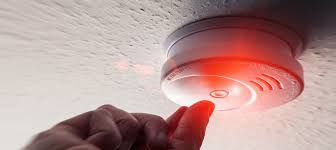
For most people, home fire safety means a smoke alarm situated somewhere on a ceiling and that’s where it ends. Either it came with the house or someone took the time to purchase one due to a news report stating everyone needs one. But it doesn’t end there. Home fire safety is not a one-time thing and the basics are easier than you’d think.
The best part? It doesn’t require extensive layouts and costly configurations—it just needs the right devices situated in the right places—and maybe attention paid to details that otherwise go unnoticed without a second thought.
Smoke Alarms and How To Manage Them
Let’s start with smoke alarms: there’s no point if they don’t work when you need them. Common sense, right? But when was the last time someone went to someone’s home—or on vacation—only to have the smoke alarm go off for a dead battery or twelve years of no changing since they were first installed?
Smoke alarms are meant to be checked monthly and batteries changed every year but let’s be honest, how many people do that? Luckily, newer technology is better. Sealed batteries mean one can have a smoke alarm for about a decade without any new batteries—ten years to be battery free is a win in the book of why smoke alarms don’t work (change of battery being the number one reason). Quality UK Smoke Alarms with long-lasting batteries mean you won’t need an annual reminder.
They should be installed on every floor of the home—basement if applicable—and at least outside sleeping rooms and inside (if applicable). Since heat rises—smoke rises—it makes sense to mount them on ceilings and high on the walls. Don’t put them in a corner where airflow is stagnant. Don’t put them near bathrooms or kitchens since steam and fire might set them off.
But those false alarms are not dangerous (perhaps unnerving) but unintentionally teaching someone to ignore an alarm or remove a battery is dangerous. If your smoke detector goes off every time you burn toast, good luck responding to that call when there is danger. Optical sensors work better than older ions because they pick up particles better. If your family cooks often near the smoke alarms, this might be important.
Carbon Monoxide Detection
Carbon monoxide is something people don’t think about in their homes until it’s too late. Anything fuel-burning in your home means carbon monoxide: your boiler, gas fire, obstructed chimney. It has no color, odor, or taste but it will kill you as you sleep.
If you have gas appliances, any boiler or fireplace—get a carbon monoxide alarm. This is not for precaution; this is for accidental death protection. The first signs of carbon monoxide poisoning equal flu symptoms—which is all too easy to dismiss until it’s too late.
Place CO alarms near bedrooms and near any fuel burning appliance. Unlike smoke rising, CO will mingle in air; it’s just as dense as air so it floats around but doesn’t stay high or low. Some people put combination units in so that there aren’t two devices to manage—one device detects smoke and carbon monoxide.
Fire Extinguishers: How To Properly Maintain Them
The average home either does not have a fire extinguisher at all or has it relegated under the kitchen sink for fifteen years with no one checking if it still works. What good is access if it doesn’t work?
For in-home purposes, A, B & C class fire extinguishers are most appropriate—this means ordinary combustible materials (A), flammable liquids (B), and electrical equipment (C). Therefore, it’s best to have one in the kitchen (most house fires start here) and potentially another near the garage/workshop if applicable.
Furthermore, extinguishers need to be maintained. Check the pressure gauge once a year—if it’s out of green it’s either not charged or gone—check it out and if it’s not good, then get a new one. Shake it once every few months to avoid powder settling.
But most important—you need to know how to use one before there’s a fire! The PASS Method (Pull Aim Squeeze Sweep) is easy enough to remember but running through it while you’re standing in your kitchen helps assure that you won’t freeze up when push comes to shove.
Escape Planning Is Fun, They Said…
No one wants to sit down with their family and “practice” escaping their home like it’s on fire but knowing you have two ways out from each room and a meeting spot outside cuts down on panic from an already frightening situation.
Walk around your home and find two exits from each room. Most bedrooms only have a door/window—that’s fine but ensure windows open easily and everyone knows how to get out via window—some old windows are rusted or stuck; not ideal when it’s dark.
Pick a meeting spot that’s far enough from the house—a mailbox, a specific tree—it does not matter what it is as long as everyone knows where it is; otherwise, you’re in for trouble if someone goes back into a burning house because they’re looking for someone already outside.
Practice once or twice a year—with kids—to keep it fresh; it doesn’t have to be elaborate but effective so everyone knows how to get outside and where to meet.
It All Adds Up
There’s nothing complicated about fire safety basics, but they take some initiative. Make sure there are operating smoke alarms on every floor. Have carbon monoxide detectors wherever there is fuel burning in the home; have one working fire extinguisher in the kitchen; create an escape plan known by all.
None of this is rocket science nor overly expensive but if one piece is missing, you’re vulnerable. The goal is redundancy—in case one layer fails then another catches it. Your alarm may go off at early signs of smoke when you can grab an extinguisher—for if that fails at least you know how to get everyone out safely.
Plan to check your devices twice a year during your spring/fall cleaning when the clocks change. Replace batteries in smoke detectors whenever clocks change as well. Replace smoke detectors every decade regardless of if they’re working or not. Do your best to keep combustibles away from flame sources. Get your boiler checked once a year. These small tasks make all the difference should anything go wrong.