



Most people consider water filtration to involve visible contaminants—sediment, rust, some off-putting smell. But there exists an invisible world of undetectable and unrecognizable threats. Bacteria, viruses, microorganisms, not to mention float around in your water supply with no one even knowing until someone gets sick.
That’s why UV technology exists instead. Instead of trying to capture or chemically react to these threats, UV filtration destroys them at a genetic level with—light. Literally. It’s almost that easy. Yet the scientific rationale is tried-and-tested.
How UV Light Kills Microorganisms
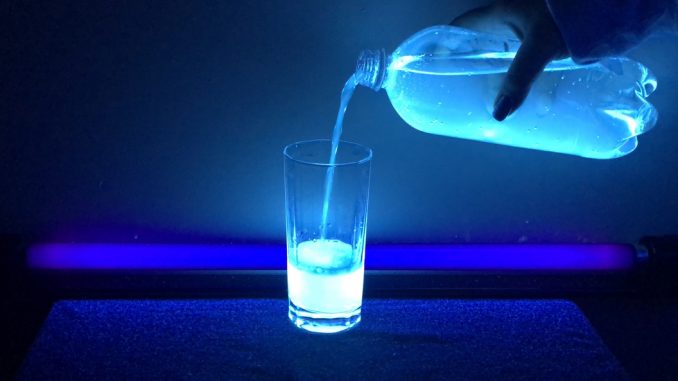
Here’s one thing to know about UV filtration—it’s not a filtration. It doesn’t permeate anything. There’s no mesh or screen to capture the bacteria or viruses. Instead, it’s the exposure of ultraviolet light at a specific wavelength (254 nanometers) that disrupts the genetic makeup inside microorganisms.
Therefore, when water flows through a UV chamber with an upstream ultraviolet lamp, microorganisms are not blocked, cut, or killed. Instead, the light penetrates them. The light disrupts the cellular makeup of bacteria, viruses, and protozoa by scrambling their DNA so they can no longer reproduce or function—the cellular structure is, effectively, disrupted. They’re still there in the water supply but neutralized and harmless. This occurs within seconds as the water passes through the system.
The best part of this action? Nothing else goes into the water. No chemicals, byproducts, funky smells or tastes. Instead, a uv light water filter relies upon exposure to light as one of the cleanest, most effective methods against biomedical contamination.
What UV Treatment Kills (and What It Doesn’t)
UV treatment is essentially effective against anything living. E. coli, Giardia, Cryptosporidium, hepatitis virus—dozens of contaminants that invade water supplies are killed essentially. Ideally 99.99% of these microorganisms are killed under ideal circumstances (sizing and handling the systems appropriately along the way).
Yet what’s interesting (and important to know) is that UV does absolutely nothing for sediment, chemicals, heavy metals and dissolved materials. This means that if you’re getting a chlorine taste, staining from iron or hardness issues (or another quality of infested particles in the water), UV is not going to help you. That’s why UV systems are almost always secondary to other filtration systems or in combination with larger systems.
UV is not the end-all be-all; rather, it’s the last line of defense against biomedical threats after users have taken care of physical infestation and chemical concerns with different filters first. For example, the most effective home water treatment systems take advantage of multiple technologies—a sediment filter first, a carbon filtration step for taste and smell and finally, a UV treatment approach for microbial safety.
When You Need UV Filtration
Not everyone requires UV treatment. If you have city water that’s sufficiently chlorinated (the municipal treatment does the biological killing for you), then the residualized chlorine in the pipes keeps everything—from bacteria to viruses—at bay by the time it makes it to your faucet.
But not all cases are as obvious. If you have well water, you’re almost always safe with getting a UV treatment—there’s no chlorine. Even a properly drilled well can be compromised—groundwater intrusion from big storms, wildlife access, or just bacteria that naturally occur in groundwater can be concerning.
City systems sometimes report inconsistencies in their treatment approach. Boil water advisories pop up more than people realize—but if your municipality continuously has boil advisories about its water quality or you’ve taken a lab sample and determined biological contaminants, then UV becomes necessary for optional use. In addition, those with immunocompromised conditions often apply for UV even for city water for extra precaution.
Maintenance Matters
UV systems require some maintenance but they’re hardly extensive or complicated to manage. The UV lamp gradually decreases in efficacy over time (despite looking like it’s still working). In fact, most manufacturers recommend lamp replacement once per year which will cost between $50 and $150 depending on system size.
Additionally, the quartz sleeve that holds the lamp also needs occasional cleaning as minerals on the outside can build up and biofilm on the inside can impede UV rays penetrating up to their maximum efficacy. Some systems have alerts when it’s time to replace a lamp or the intensity isn’t at an appropriate level.
What surprises people? UV only works in clear conditions. If your water is cloudy, those contaminants and particles can shield microorganisms from UV exposure—and this is why pre-filtration is so essential. There needs to be a pre-UV chamber sediment filter; it’s not optional. The UV system needs something prior to help it work effectively.
Making UV Part of Your Plan for Water
Most homeowners who get UV treatment install whole-house systems instead of a single tap downstream as it will never be exposed there; instead, a UV chamber is installed on the main water line after other filters but before other pipes divert with branches for particular needs.
There’s little energy requirement—the average household unit requires as much power as a typical lightbulb—and it needs to be on at all times as your household never knows when water is flowing through the pipes; however, the cost does not negatively affect an electric bill greatly.
The investment depends solely on the flow rate that is needed and whether one buys just a UV unit or the multi-stage system integrated for whole-house application instead of under-sink units elsewhere. Point-of-entry systems for whole-house use are generally more expensive than under-sink versions—but they protect all sources of water in a house instead of a singular sink faucet.
Final Thoughts for Water Safety
UV filtration technology is exceptionally powerful because it protects your drinking water from biological contamination without adding anything to it. It’s especially significant for well users and those who consistently have to battle microorganisms; however, it works best in conjunction with other layered treatment approaches than by itself as some solution.
Remember that UV kills microorganisms but doesn’t take away physical or chemical contaminants; annual replacement of the lamp is non-negotiable and water must be clear enough for it to work effectively. Added with proper pre-filtration steps (which most homeowners assume are only based on personal discretion), UV treatment acts as reliable protection against what other filters entirely miss.