



When you listen to experienced drivers talk, far more attention is paid to getting a car to handle than you might think possible. “You’ve got to get rid of the understeer on turn-in.” “I could use a little more trail braking stability.” “I want 2 degrees more negative camber.” “Dial out the oversteer in the high-speed switchbacks.” These comments make it sound like effective handling is a complex math problem. And, well, it kind of is, because beyond feel a lot of setup is indeed about combining different variables of a car’s grip to find the highest possible total. This is why thinking about the car as a complete tool is so effective. If your chassis or suspension doesn’t have enough bearing to handle another few dozen horsepower, well, you’ll never get those improvements out of your engine.
Tires are doing more work than you think
There’s no other aftermarket car parts upgrade that gives back more in immediate handling performance than tires. The contact patch – the area of rubber actually touching the road at any given time – determines your lateral grip, your braking distance, and how precise your steering input is. All of your suspension modifications are working within the parameters set by those four contact patches.
The difference between a standard, touring tire and a dedicated, high-performance summer tire is quantifiable; upgrading from one to the other can cut braking distances and potentially lift lateral G-force limits well beyond that. – all before you spend a dime on anything else in the car.
Suspension that actually works together
Factory suspension is full of compromises. It’s specifically adjusted for optimal comfort under various circumstances, rather than to act responsively when you’re pushing limits. For many enthusiasts, upgrading this system is their first costly error.
Specifically, many will fit stiffer lowering springs but not upgrade the dampers, leaving them with a car that bounces through turns since the shocks can’t regulate the spring rate. Coilovers prevail here since the damper rate is made to match the spring rate and can be changed when needed.
Additionally, you may want to consider polyurethane bushings to replace the factory rubber ones in the suspension arms and steering rack. Rubber will displace when under heavy force; polyurethane won’t. You’ll suddenly feel the change in your steering; it’ll be more direct and predictable.
If you still feel like factory sway bars aren’t delivering enough performance, an upgrade also makes sense. A stiffer bar provides less body roll without having to compromise ride quality (e.g. by stiffening the spring) – it’s one of the more enjoyable upgrades a street-driven car can get.
Braking should be upgraded before power
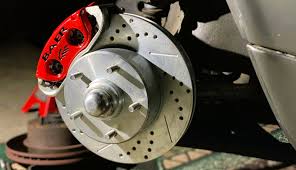
Brakes are one of the most important parts of a high-performance car, yet they are often overlooked when it comes to upgrades. Upgraded brake pads, and slotted or drilled rotors are commonly known performance upgrades, however, stainless steel braided brake lines are not often spoken about among car enthusiasts even though they provide one of the best bang-for-the-buck performance upgrades. This is because factory rubber lines tend to expand under hydraulic pressure. This gives the pedal a soft and vague feel. Braided lines, on the other hand, do not expand. This provides a firmer and more consistent feel on the pedal.
Power upgrades that make sense in context
Once the chassis and brakes are sorted, power becomes something you can actually use. With a cold air intake bringing denser air into the engine, a turbocharged car’s high-flow exhaust also helps take the spent gases out as quickly as possible and helps deliver the promised power gains. Interestingly, the two behave better together than they would in isolation.
The step most people skip is ECU remapping. Adding airflow without adjusting the tune means the engine’s air-fuel ratio and ignition timing are still calibrated for the factory setup. A remap lets the computer account for what’s actually happening, which is how you convert hardware changes into real power gains.
Wheels, weight, and the upgrades most people underestimate
Lightweight forged alloy wheels reduce unsprung weight, which is the mass the suspension has to manage independently of the car’s body. The less unsprung weight there is, the faster the shocks respond to road inputs, and the less effort the engine expends in getting the wheels up to speed. The improvement isn’t only in straight-line acceleration. It also shows in how quickly the car reacts as you turn the wheel.
When you’re sourcing wheels and other parts, fitment matters as much as spec. Use the wrong offset or load rating and you’ll have problems that no amount of tuning will make better. Performance and custom build shops like OzKonic Kustomz tend to get this right because they’re responsible for the behavior of the parts after they’re fitted, not just how cool they look in a box on a shelf.
Chassis bracing – strut tower bars or underbody braces – you should only consider on older platforms where frame flex was a known quantity. It’s not something everybody needs, but on cars where stiffness wasn’t a priority during the design process, bracing makes everything else you’ve added work the way it should.
You don’t build a faster, better-handling car by going out and buying the flashiest parts first. You buy upgrades in a specific order so that the platform you’re improving can take advantage of them.