




Most people never look at their home like a storm would. You see paint and siding. A storm sees vulnerable spots, tiny openings, and materials that breakdown more each season.
The hard part is that significant damage doesn’t make itself known. When leaks grow big enough to worry about or structural concern starts forming, it usually happens from something you’d miss walk-in down the street – just a crack, a discoloration, a trim coming off. By the time it warrants major concern, you’re paying for a bigger repair than warranted.
This is what you should look for and what each means about what’s happening to your house.
Water Stains and Discoloration
Water finds a way. It always leaves behind evidence.
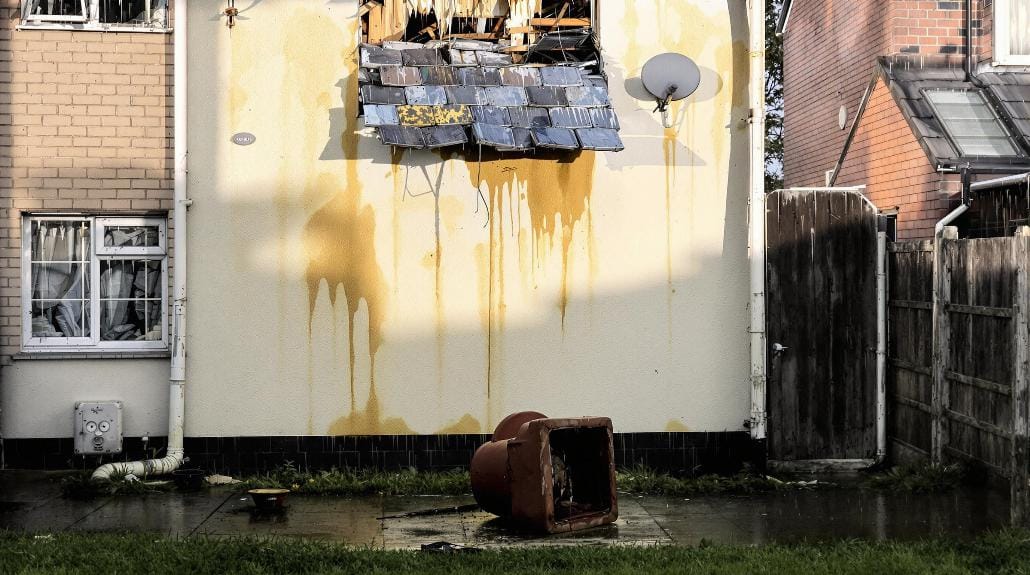
Dark streaking on your siding isn’t just dirt; it’s water getting behind something and making its way through to the top, which means it traveled through places in which it shouldn’t have been. These stains typically occur below windows, at the edge of roofs, or anywhere the exterior meets.
In addition, stains manifest in various colors for different reasons. Brown/rust colors suggest metal flashing is failing. Green and black streaking suggests algae or mold growth; both situations can only happen when there remains moisture for a long period of time – long enough for microorganisms to grow. White chalky stains (efflorescence) on bricks or stone suggest water is happening inside the masonry, that moisture is actually working through your walls and being left behind through evaporation in solid form as salt deposits.
Warped or Buckled Siding
Siding should be flat. If it’s not, something forced it out of alignment.
Typically buckling occurs when materials continue to expand and contract due to temperature or when water intrudes and causes swelling. Vinyl siding buckles when it’s been installed too tight and can’t expand when it needs to during warmer months. Wood siding warps because its moisture content changes; it absorbs water, swells, then dries out and shrinks repeatedly until it loses the ability to hold its shape.
But when siding is warped, this means that the moisture barrier behind it is compromised. This is when a professional siding installer comes in to see if you require local repairs or if the damage goes beyond what’s visible into the wall system.
Ripping or wave-like appearances on your siding suggest water has moved past your sheathing behind the material; your siding is merely following the patterns of rotten plywood or OSB beneath.
Cracks and Splits
Little cracks multiply. It’s their nature.
Expansion occurs during heat and contraction occurs during cold. Eventually something gives. Cracks in siding, stucco or trim start out minuscule but open like a zipper – you get them started and they continue on their merry way.
But what’s important to note is where they present themselves to determine how they formed. Cracks emanating from corners of windows or doors indicate settling or shifting framing, while horizontal cracks suggest impact or improper installation if they’re in stucco or fiber cement. Vertical splits in wood siding are simply the result of age mixed with moisture cycles.
From here on out, though, cracks are bad. Now you’ve got an entry point for water – and water is patient. It seeps, freezes, expands and makes cracks bigger. Then it does it again this coming winter.
Peeling or Blistering Paint
Paint failure doesn’t occur due to paint; it occurs due to what’s underneath.
When paint peels off in sheets, something’s pushing it from below; paint never dried properly upon application from the surface side since there’s excess moisture below it OR air moisture (from inside) is seeking release and thus pushing up against the exterior wall as well. Either way, paint becomes unstuck because something wet gets in between paint application and its substrate.
Blistering looks different; paint bubbles up when water (or air) gets trapped between paint film entry. If you pop it open and see bare wood, that means moisture is coming in from outside (rain getting behind your siding). If you see another layer of paint, poor surface prep is to blame or painting a hot surface in direct sun.
Then there’s chalking – when paint turns powdery chalky on your hand – that is UV breakdown typically from older paint. If it’s happening to paint only a couple years old, either the surface wasn’t prepped properly or you’re dealing with cheap paint.
Rotted or Soft Wood
Wood shouldn’t feel soft.
Utilize a screwdriver to test your trim, window sills or wood siding. If it penetrates down without effort, that wood is now rotting with no structural integrity. Rot typically occurs where water lies (horizontal areas), wherever two pieces meet or where caulking has failed.
The problem with rot is that by the time it’s visible or tangible, it’s been occurring for a while. Wood rot requires continuous moisture access – which means there’s been a water problem in that same area for weeks or months at a time. What you see now is just a fraction of what’s been going on.
Corner boards and trim at the foundation tend to rot first since they meet ground moisture/splash-back from rain. Window sills rot since they’re designed to shed water – but if they don’t have the drainage slope required and paint access stays compromised, they become susceptible too.
Missing or Damaged Shingles
Your roof tells the tale of every storm it’s been in.
It’s clear to see that shingles are missing but when damage isn’t as apparent it’s even worse. Curling edges of shingles, cracking or granules disintegrating are signs of failure; those granules aren’t for aesthetics – they protect asphalt-like material from UV rays – and without them, they’re aging quicker than expected.
After heavy winds check for lifted shingles that remain – visually they might be fine but if the seal gets compromised, water can work its way underneath those shingles; one lifted shingle endangers adjacent ones when another storm rolls through.
Hail damage is hard to spot. Look for dents in shingles (on the side that typically faces approaching storms). Hail doesn’t crack them immediately but it certainly weakens them as potential overhead damage down the road.
What To Do When You Discover Damage
If you catch damage earlier than later, it’ll be cheaper to repair – and that’s what finding these signs are all about.
Photograph everything – documentation matters, as do close-ups and images showing where things are located – and if you file an insurance claim for storm damage this documentation goes further than you’d think.
With minor occurrences-small cracks, minor peeling paint here or there, a few loose shingles – you can likely repair those areas yourself. But when you have patterns (multiple areas damaged, water stains), that’s when it’s time for professional attention – exterior damaged often indicates concerns under things that involve specialist removal.
Bottom line: don’t let small problems become big problems by putting off changes; weather doesn’t take a rest once damage occurs; it’s always working whether you want it to or not, season after season until something makes you intervene – and this would be better on YOUR timeline rather than whatever damage’s timeline happens to be!