




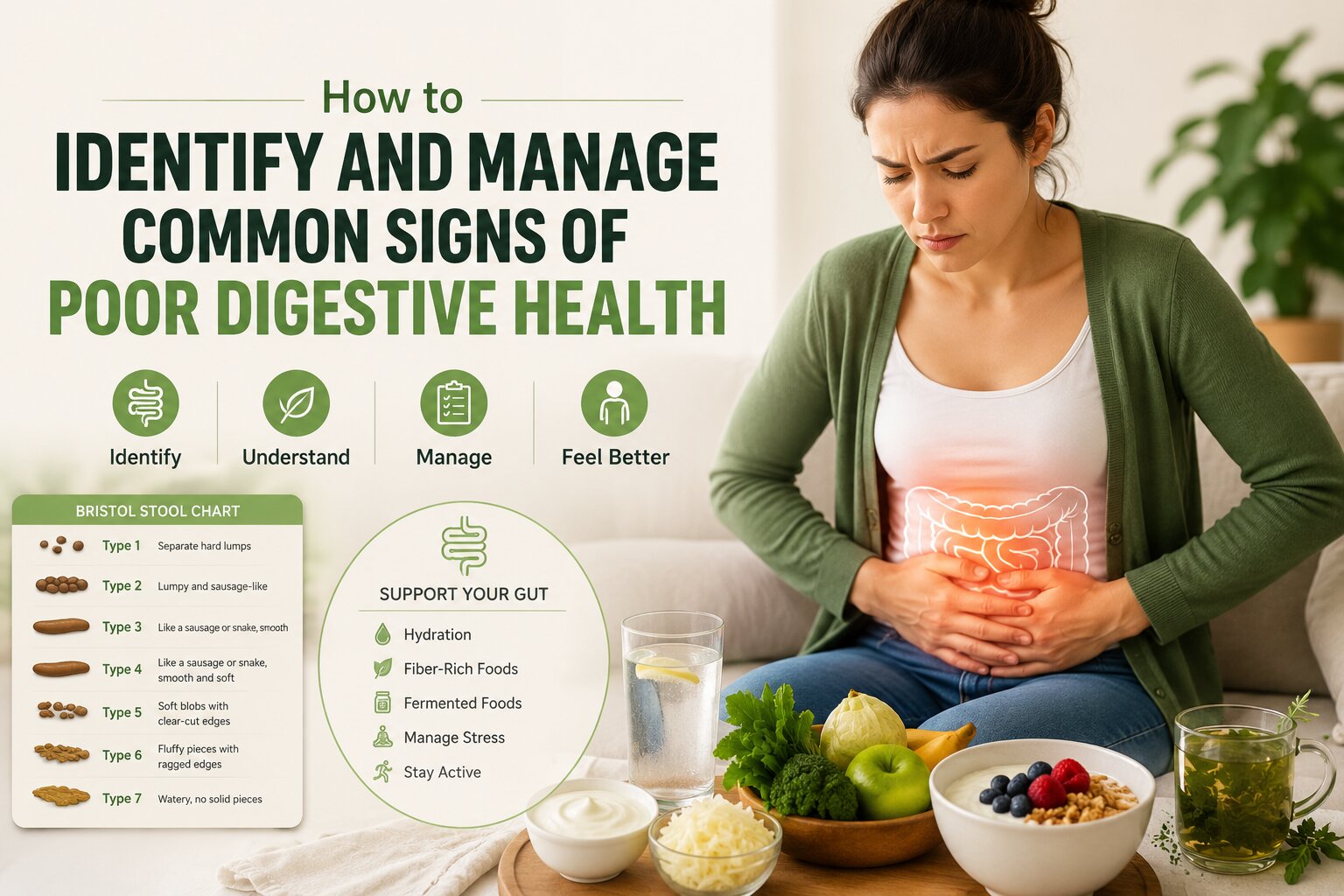
Most people treat digestive discomfort as background noise – something to push through with antacids or ignore until it gets worse. But persistent bloating, irregular stools, and that low-grade sluggishness after meals are rarely random. They’re signals, and understanding what’s behind them makes them a lot easier to address.
Bloating Isn’t Just About Eating Too Much
Long-term bloating is one of those symptoms connected to digestive health that is so often misunderstood. Individuals inevitably think ‘I just ate too much’ or ‘My system doesn’t like this food, I must be intolerant to it’. Yet in reality, the root cause is slow motility or dysbiosis – bacterial imbalances in your gut.
And here’s why this leads to bloating that won’t quit. If food isn’t being passed through the gastrointestinal (GI) tract efficiently enough, it’s going to hang out in the colon for longer than it should. Bacteria ferment the undigested food, and in the process produce gas – the two things responsible for the distension and physical discomfort. So, it’s not actually the food that is the problem; it is what happens to the food when peristaltic movement is sluggish.
The health and diversity of the bacteria in your gut (your microbiota) also become key in the bloating stakes. In a healthy microbiome, there’s enough good bacterial diversity to break down food without over-fermentation. But when the balance of bacteria shifts – thanks to a poor diet, stress, or perhaps a recent course of antibiotics, for example – the tendency for gas and bloating increases. This is where introducing more fermented foods, upping your prebiotic fiber, and cutting back on highly processed carbohydrate foods can help.
How Poor Digestion Shows Up Outside The Gut
One of the most surprising things about your gut is how problems with it can cause other things to go wrong. For example, your skin, brain, and energy levels. A colon cleanse tea can be one tool people reach for, and alongside this, understanding the root causes matters too.
Leaky gut is a problem with the seal between the cells lining your gut. A ‘tight junction’ holds your intestinal cells together, controlling what passes through the lining of the intestine into the bloodstream; with leaky gut, this barrier is compromised. Partially-digested proteins and bacteria can ‘leak’ into the bloodstream from the intestines, causing widespread inflammation. This doesn’t stay neatly in the gut and could be causing problems with your skin, your mind, and your sleep.
The connection between your brain and your gut is known as the Gut-Brain Axis. It’s a way that the central nervous system communicates with your enteric nervous system – a complex web of neurons and signaling pathways that can work the other way too. What this really means is that your gut can talk to your brain too.
Using The Bristol Stool Chart As A Self-Diagnostic Tool
Transit time – how long it takes food to move from ingestion to elimination – tells you a lot about digestive function. The Bristol Stool Chart gives you a practical way to assess it at home without any clinical tests.
The chart runs from Type 1 (hard, separate lumps) to Type 7 (entirely liquid). Types 3 and 4 are the target: formed, smooth, and easy to pass. If you’re consistently producing Type 1 or 2, transit time is too slow and stool is spending too long in the colon, losing moisture. Type 5 through 7 suggests the opposite – food is moving too fast for adequate nutrient absorption.
Slow transit is almost always connected to low fiber intake, insufficient hydration, or both. Fast transit can indicate gut irritation, a bacterial imbalance, or inflammatory conditions like IBS that affect how the intestinal wall responds to food.
A Practical Hierarchy For Improving Digestive Function
When symptoms are present, there’s a logical order for addressing them. Starting with pharmaceutical interventions before covering the basics rarely produces lasting results.
Start with hydration. Water softens stool, supports the mucosal lining of the intestines, and helps the body move waste through the colon. Most people are chronically under-hydrated, and that alone slows transit time noticeably.
Increase fiber – both types. Soluble fiber forms a gel that slows digestion and feeds beneficial gut bacteria. Insoluble fiber adds bulk and speeds transit. Getting both from whole foods is the goal, but most people’s diets are significantly short on both.
Mechanical digestion also matters more than we give it credit for. Chewing thoroughly – around 20 to 30 times per bite – reduces the particle size of food before it even reaches the stomach. When we rush through meals, we’re offloading that work to the stomach and small intestine, which increases the chance of incomplete digestion and fermentation further down.
When hydration and fiber still aren’t moving things along, herbal support can provide additional relief. A well-formulated herbal blend can gently support the body’s natural elimination process without the harsh effects associated with stimulant laxatives – useful as a short-term tool when the digestive system needs a reset.
Building Consistency Over Time
Digestive health isn’t fixed with a single change. It responds to patterns – consistent hydration, regular fiber intake, managing stress that disrupts gut-brain signaling, and paying attention to what your body is actually telling you.
The symptoms most people dismiss as normal – the bloating, the irregularity, the post-meal fog – aren’t something you’re stuck with. They’re correctable, and they usually respond faster than people expect when the right foundations are in place.